
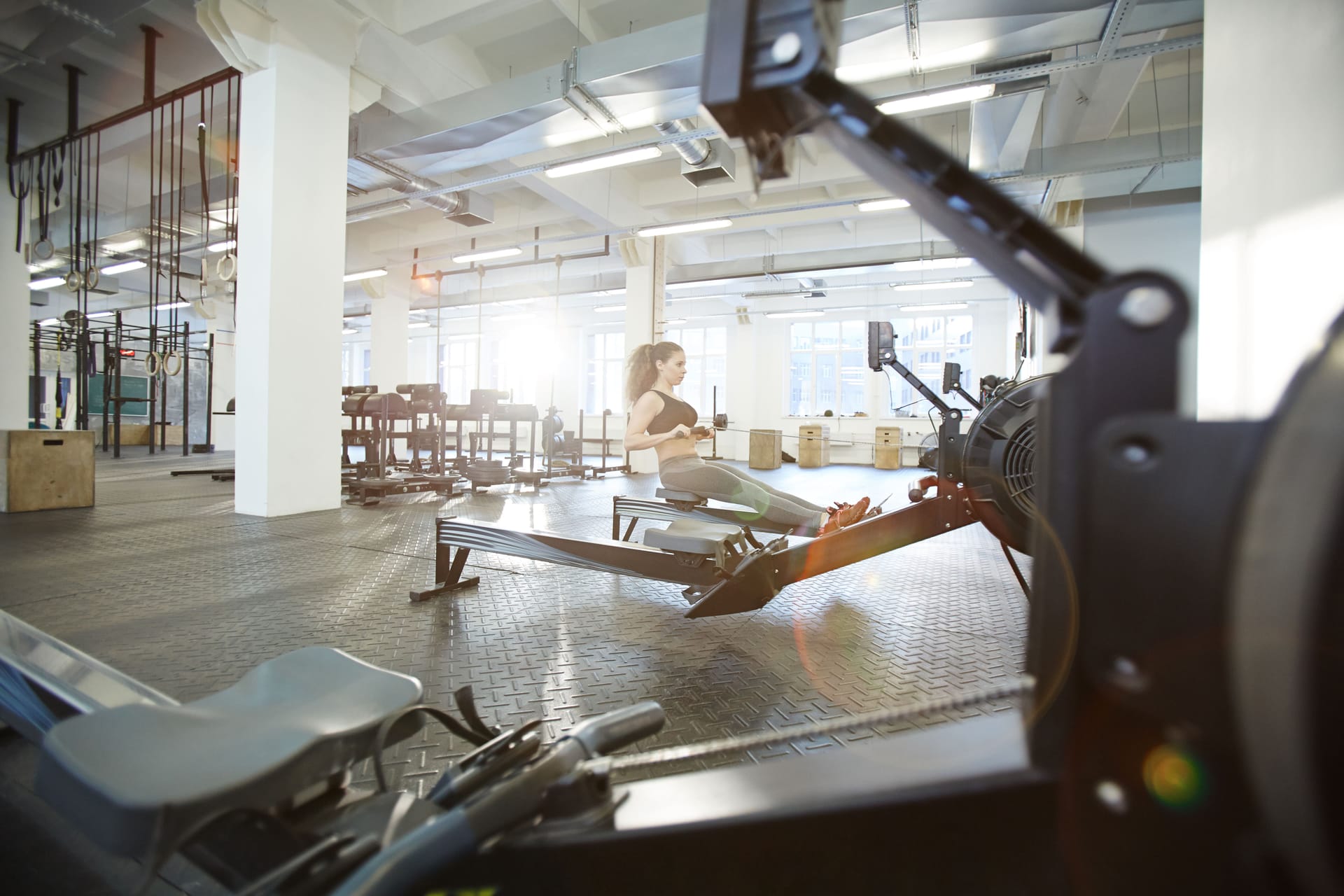
Full-body fitness
Yes, a rowing machine is a full-body workout.
One movement, whole body: legs, core, back, and arms, every stroke. A complete session takes about 20 minutes.


The muscle map
Two different numbers, and they both hold up
Muscle recruitment: nearly the whole body
A rowing stroke calls on your legs, glutes, and core to drive, then your back, shoulders, and arms to finish: more of your musculature working together than almost any other cardio machine. This is often cited as engaging around 86% of your body's muscles, a figure that's widely repeated in rowing and Concept2-associated fitness content rather than a controlled lab measurement. Treat it as a commonly-cited figure, not a hard clinical number. But directionally, it holds up: very few muscle groups sit out a rowing stroke.
Power distribution: legs do most of the work
Recruitment isn't the same as effort. Within each stroke, the power comes overwhelmingly from your legs: the widely-used breakdown is roughly 60% legs, 30% core/trunk, 10% arms. Your legs drive the movement, your core transfers that power through your trunk, and your arms and back finish the stroke. They don't start it.
Put together: nearly all your muscles are involved (recruitment), but most of the power comes from your legs and core, not your arms (distribution). That's the two numbers reconciled, and why "rowing is an upper-body workout" doesn't hold up.
Where the power comes from, per stroke
Widely-used stroke breakdown, not a per-person clinical measurement. Your split shifts with technique and damper setting.
One machine, whole body
Full-body cardio and strength, on one machine
A treadmill trains your legs. A cable tower trains strength. Here's how a rowing machine compares across the things that matter for a one-machine home gym.
| Machine | Full-body? | Low-impact? | Cardio + strength? | Footprint |
|---|---|---|---|---|
| Rowing machine | Yes | Yes | Yes | Compact, stores upright |
| Treadmill | No, legs only | No, impact loading | Cardio only | Large |
| Exercise bike | No, legs only | Yes | Cardio only | Medium |
| Elliptical | Partial, light arm assist | Yes | Cardio only | Large |
| Cable tower | Yes, across exercises | Depends on exercise | Strength only | Large (frame or wall-mounted) |
None of these is a bad machine. Each is good at what it does. The rowing machine is simply the one built to do full-body cardio and strength-endurance together, in the same session.
Where Row Nation comes in
A guided full-body session, every time
A rowing machine on its own doesn't tell you how to use your whole body well. Row Nation turns your Concept2 RowErg into a structured, guided full-body workout.
Guided workouts pace your legs-first technique so your stroke stays full-body instead of an arms-only pull, and about 20 minutes is enough for a complete session: cardio and strength-endurance, done.
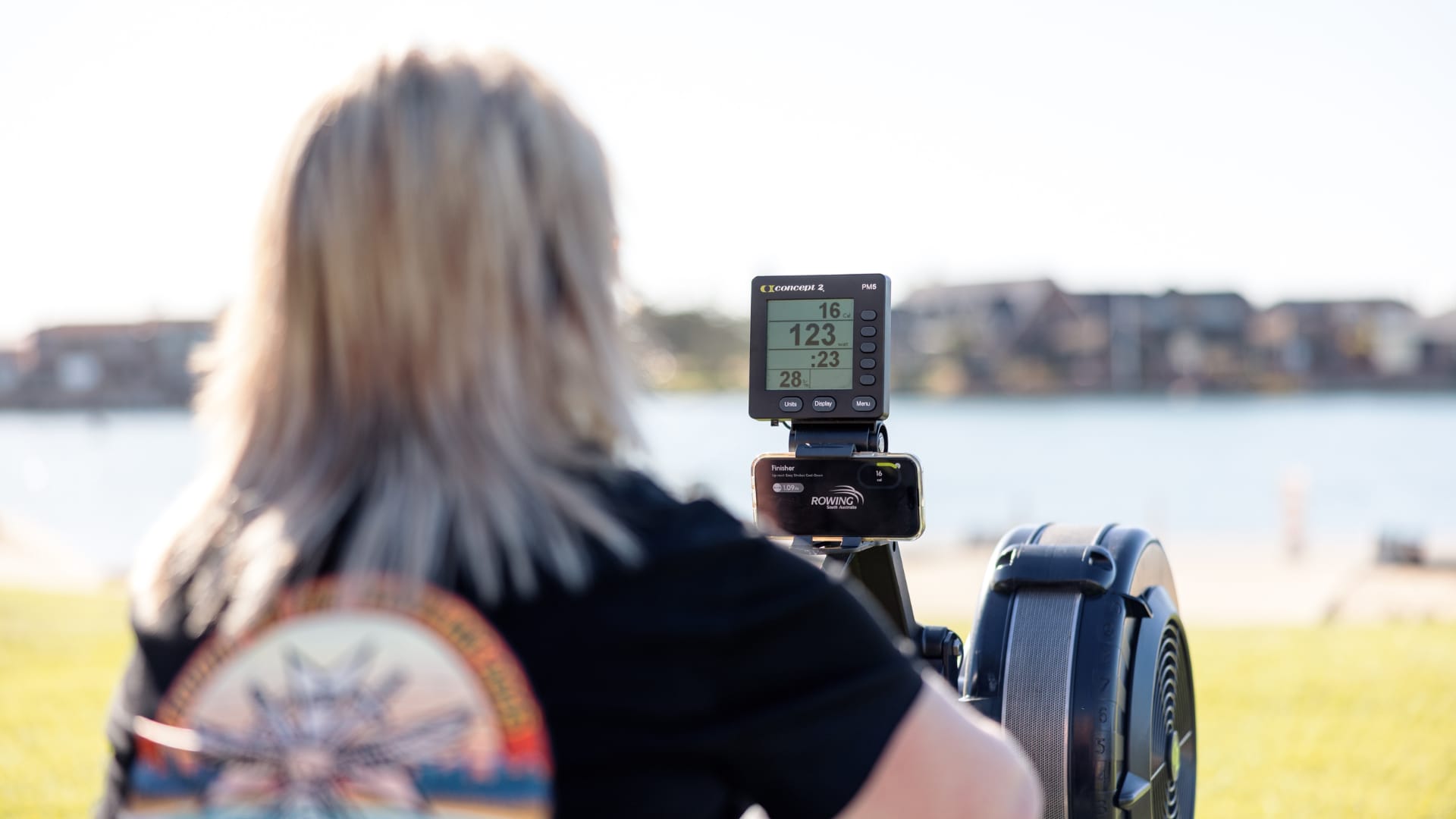
Questions
Full-body rowing, answered
Is a rowing machine a full-body workout?
Yes. A rowing stroke drives through your legs, transmits through your core, and finishes with your back and arms working together in one continuous movement. Few cardio machines engage this much of your body in a single motion.
What muscles does a rowing machine work?
Rowing engages your quads, hamstrings, and glutes on the drive, your core and lower back to transfer that power, and your lats, shoulders, and arms to finish the stroke. It's often cited as engaging around 86% of your body's muscles, a widely repeated figure rather than a precise lab measurement, but directionally accurate: very few muscle groups sit out a rowing stroke.
Is rowing better than running or cycling for full-body fitness?
For full-body engagement, yes: running and cycling are largely lower-body cardio, while rowing adds your core, back, and arms into every stroke. That doesn't make rowing better outright: running and cycling both have their own strengths, but if training your whole body in one movement is the goal, rowing does more of that work.
Can one machine be a full home gym?
A rowing machine gets closer than most single machines: it trains full-body cardio and strength-endurance together, unlike a treadmill or bike (cardio only, lower body) or a cable tower (strength only). It won't fully replace heavy strength training, but for cardio plus functional strength in one footprint, it's hard to beat.
How long should a full-body rowing workout be?
About 20 minutes is enough for a complete full-body session: long enough to warm up properly, work every major muscle group, and get a real cardio effect. Row Nation's guided workouts are built around sessions like this, so you don't have to plan it yourself.
Train your whole body, one machine
Download the Row Nation app and get a guided full-body session on the RowErg. Legs, core, back, and arms: about 20 minutes, done.